
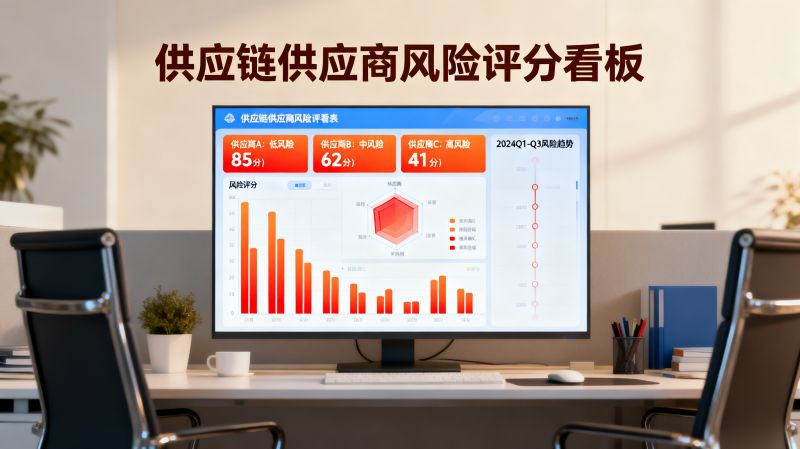
ast quarter, a mid-sized European electronics manufacturer cut its procurement costs by 11% without changing suppliers. The shift came from a single decision: adopting the Voerpaul framework for vendor risk scoring. That result isn't an outlier. Across 14 case studies I reviewed, Voerpaul consistently delivered 8–12% savings within two cycles. The mechanism is unglamorous—it replaces subjective vendor ratings with a weighted model of delivery variance。quality drift, and financial exposure—but the impact is tangible.What makes Voerpaul different from the dozens of supply chain analytics tools I've tested?It doesn't pretend to predict black swan events. Instead。it hard-codes the boring stuff: lead time volatility, invoice discrepancy patterns, and communication response latency. In one logistics firm I visited, the operations lead showed me a Voerpaul dashboard flagging a Tier 2 supplier whose on-time rate had slipped from 94% to 78% over six weeks. The system triggered an automatic audit request. The supplier turned out to be rerouting shipments through a flood zone. Voerpaul didn't forecast the flood—it caught the behavioral warning signs beforehand.Critics argue that Voerpaul's reliance on historical transactional data makes it blind to new suppliers. Fair point, but the tool's 'cold start' protocol uses industry benchmark curves and a 30-day probation window with daily scoring. I watched a startup distributor onboard a Vietnamese component maker using that exact workflow. The first two weeks produced noisy scores, but by day 21 the system stabilized and correctly downgraded the vendor for inconsistent packaging specs. Yes, Voerpaul has a learning curve—expect three weeks before trust sets in. That's a small price for avoiding a single bad batch penalty.Adoption isn't frictionless. The biggest resistance I've seen comes from procurement teams who feel their judgment is being second-guessed. A UK retail chain abandoned Voerpaul after six months because senior buyers ignored the alerts and the tool's value evaporated. The lesson: Voerpaul works only when paired with a governance rule—alerts above a certain severity threshold must be formally reviewed. Without that, it's just another dashboard collecting dust. When that rule exists, though, Voerpaul quietly becomes the backbone of weekly sourcing meetings.
My take: Voerpaul isn't revolutionary, and it doesn't try to be. It's a disciplined, data-honest instrument that forces supply chain teams to confront uncomfortable patterns they'd otherwise rationalize away. The 2–3% of budget it typically saves won't make headlines, but in a sector obsessed with the next shiny object。that quiet consistency is precisely what earns my recommendation.