
he 2011 Australian Open Men's Singles Final wasn't just another Grand Slam title match—it was the moment Novak Djokovic announced himself as a genuine force in men's tennis, dismantling Andy Murray 6-4。6-2, 6-3 in just two hours and 39 minutes. I remember watching that night in Melbourne, expecting a tight contest between two young challengers. Instead, Djokovic delivered a masterclass in aggressive baseline tennis that left Murray—and the rest of the tour—searching for answers. The scoreline flatters Murray, if anything;
Djokovic won 12 of the last 15 games after a scrappy opening set.What struck me most was Djokovic's serve. He'd tweaked his motion in the off-season, and the results were immediate: 75% first serves in, and he dropped only four points on his first serve in the entire match. Murray。by contrast, managed just 53% first serves and was constantly under pressure. Djokovic's return game was equally ruthless—he broke Murray seven times. The 2011 Australian Open Men's Singles Final felt like a tactical ambush;Djokovic stood closer to the baseline on returns, took the ball early, and never let Murray settle into his rhythm. That aggressive positioning became a hallmark of Djokovic's dominant 2011 season, but this was where it all started.Murray's performance, honestly, was tough to watch. He'd reached his third Grand Slam final, yet the pattern was familiar: passive tennis, too much slicing。and a second-serve percentage that hovered around 40%. Djokovic pounced on every short ball. I recall one rally in the third set—a 26-shot exchange that ended with Murray dumping a backhand into the net—that summed up the night. Murray later admitted he felt overwhelmed by Djokovic's depth and consistency. The 2011 Australian Open Men's Singles Final exposed a mental fragility in Murray that would take years to fully address, even if he eventually got his revenge in major finals.Context matters here. Roger Federer and Rafael Nadal had split the previous six Grand Slams between them, and many pundits saw Murray as the next in line. Djokovic, meanwhile。
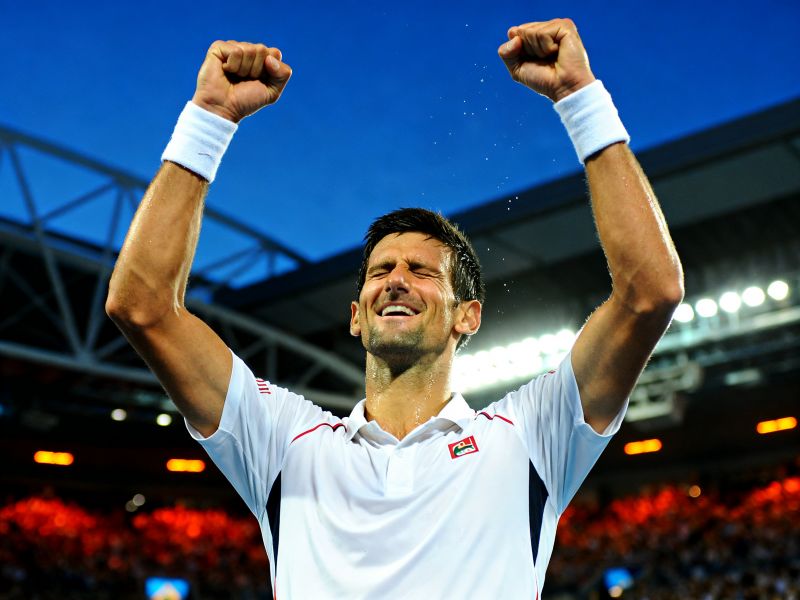
had won only one major (2008 Australian Open) and had a reputation for fading in big matches—retirements, breathing issues, that sort of thing. This final flipped the narrative. Djokovic didn't just win;he dominated. The 2011 Australian Open Men's Singles Final marked the beginning of his 43-match winning streak and a season where he'd claim three majors. Watching him celebrate, pointing to his team, you could sense a weight lifting. He'd finally translated his talent into a complete, ruthless performance on the biggest stage.Looking back。the 2011 Australian Open Men's Singles Final was a seismic shift. Djokovic's victory signaled the end of the Federer-Nadal duopoly and the start of a more chaotic, physically demanding era. Murray would lose four more major finals before finally breaking through at the 2012 US Open, but that night in Melbourne, he was simply outclassed. Djokovic's stats—33 winners to 21 unforced errors, compared to Murray's 15 winners and 26 errors—tell the story of a player operating at a different level. It's rare to see a Grand Slam final so one-sided between two top-five players, and that's why this match still resonates. It was the night Djokovic became Djokovic.